
AI can't make a decent carbonara, but your team can!
Somewhere between the third Zoom call and the fourth Slack ping, most of us stopped touching things. We type, we tap and we scroll our way into carpal tunnel syndrome, and yet our hands forgot what it feels like to actually make something. Funny, isn't it, that the generation with the most powerful tools in human history has also become remarkably good at producing absolutely nothing tangible while obsessing over productivity. As an agency, we've spent the last decade watching companies wrestle with this exact paradox, and the pattern never gets old.
Teams arrive exhausted by abstraction, used to endless decks, endless dashboards, endless meetings about meetings, and even the team building industry is exploring digital and technological tools and experiences. What professional are craving, though, is something they can hold, shape, and mess up with their own two hands: they want to explore crafts in which they don't have to compete with LLMs. And we think we found just the thing. Because artificial intelligence can make content, it can make plans, it can make music. But it can't make a decent carbonara. 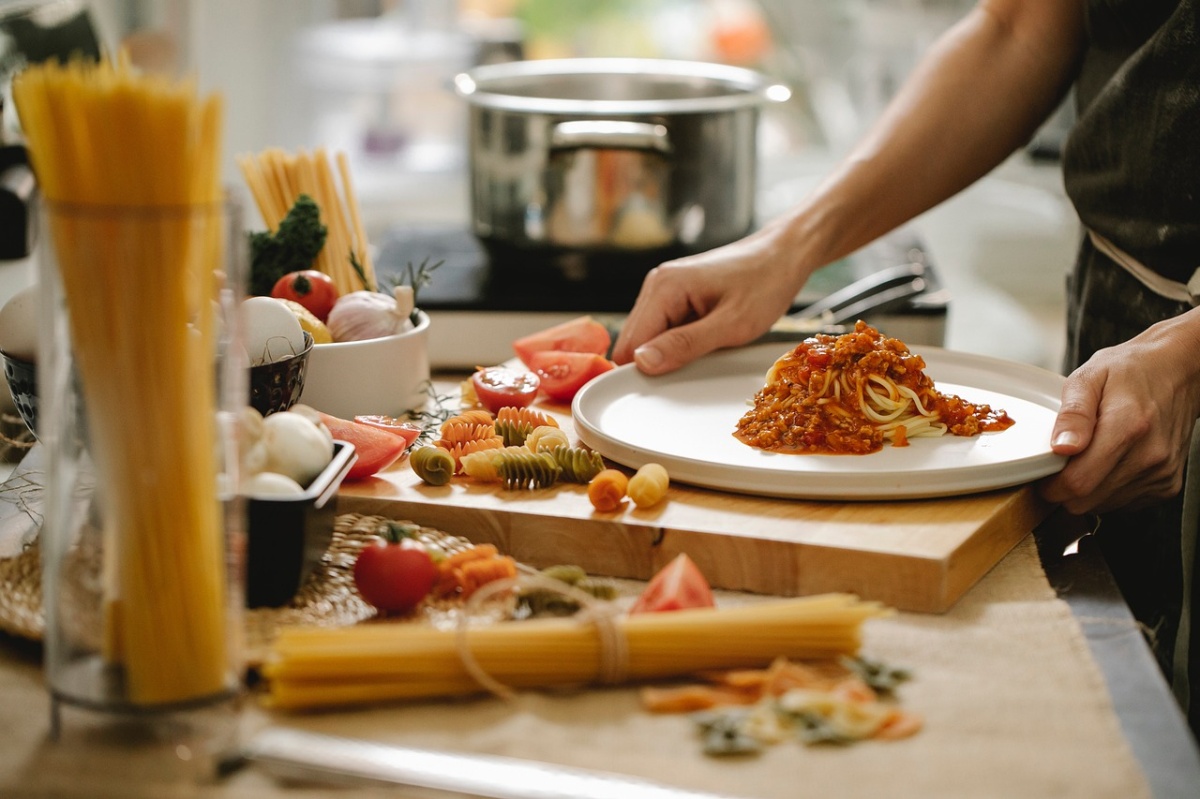
Experience-based team building: the hands know things the brain forgot
Craftsmanship has been around for millennia, and yet we managed to forget about it in under ten years. This doesn't mean, of course, that we can't go back to it, but doing it requires switching into a different mode of thinking entirely, one where mistakes are immediate, feedback is physical, and there's no undo button. Cut the dough wrong, burn the guanciale, overcook the eggs and you'll know in seconds, because your nose and your eyes will tell you with no need to wait for a quarterly review. This kind of feedback loop builds back trust in your own judgement, through repetition and a fair number of small failures.
Educational theorists have been banging on about this for over a century, and the science backs them up rather convincingly. Hands-on, experiential methods have been shown to lift retention rates dramatically compared with passive listening, and the effect compounds when people work through a challenge together rather than alone, because experiential learning retains far more of what's taught after six months compared with passive formats. Teams that learn by doing remember more, argue and communicate better, listen harder, and notice each other's strengths way better than teams that go through traditional training or team-building activities. 
Experiential team building needs to be challenging: creativity needs friction in a frictionless world
There's an odd assumption floating around modern offices that creativity is something you summon with the right software. An assumption vastly disproven by the overwhelming amount of slop that can be found online, which is what you get when you delegate creativity and deprive it of its natural engine and its original source, i.e. human experience. Creativity needs constraint, mess, and a deadline, but, most of all, it needs friction, struggle, some sort of hero-journey in which the creative mind gets to work around obstacles and overcome challenges. Give a group of colleagues a genuinely tricky physical task, three ingredients, a tight clock, and a result everyone can see and taste, and watch what happens to the energy in the room: people stop performing competence and start actually using it. This is precisely where experiential, learning-by-doing formats earn their keep within corporate team building. They strip away titles and seniority and replace them with a shared, slightly chaotic project. Nobody's job description prepares them for plating a starter in eleven minutes flat, which is rather the point.
AI can't make carbonara
Here's an basic truth for anyone who's been promised that algorithms will eventually do everything better than we can: no machine has ever made a decent carbonara, and frankly, none ever will. Not because the recipe is secret (it really isn't, four ingredients, that's it), but because carbonara punishes anything that isn't human attention. The egg seizes if you're a second too slow, the pasta water needs judging by eye, by smell, by the slight resistance under a wooden spoon. You can train a model on ten thousand recipes and it still won't know when the guanciale is crispy enough, because it has no mouth, no nose, and no hands. Food is stubbornly, gloriously physical. It engages sight, smell, touch, sound, and taste all at once, and that combination cannot be downloaded. We realised that during the pandemic, when companies where desperately asking us for team building options that could add a physical component to the desperately cold and alienating reality of being locked in a room away from your colleagues, unable to share a physical space. Sharing a meal you've cooked together has since proven to be the best way to reconnect to the fact that we are all animals with bodies, not just inboxes with names attached.
Bringing the heat of a kitchen into corporate life
This is precisely the territory we work in. Our cooking challenge puts colleagues into proper kitchen brigades, guided by professional chefs, racing to build an original menu from fresh ingredients while juggling communication, planning, and a tight clock that doesn't care about your job title. Nobody escapes without learning something about how their team actually operates under pressure. For groups whose talents lean more towards stirring than chopping, the mixology challenge hands them a shaker, a jigger, and a genuine excuse to share a colourful drink while experimenting with flavour and timing as a team. And for those after something a touch more refined, the wine challenge turns colleagues into blind tasters, sharpening focus and palate while building the kind of trust that comes from spending hours describing physical sensations in detail to each other. Each format is different, each one is rooted in the same idea: learning sticks when the body is involved.
What this actually means for your next team building event
None of this is nostalgia for a pre-digital age, because frankly that age had its own problems and we're not interested in pretending otherwise. It's a recognition that craftsmanship and creativity thrive on the kind of friction screens were specifically designed to remove. Teams that learn together through experiential, hands-on activity build something durable: a shared, slightly messy memory of having actually made something, together, with the people they work alongside every day.